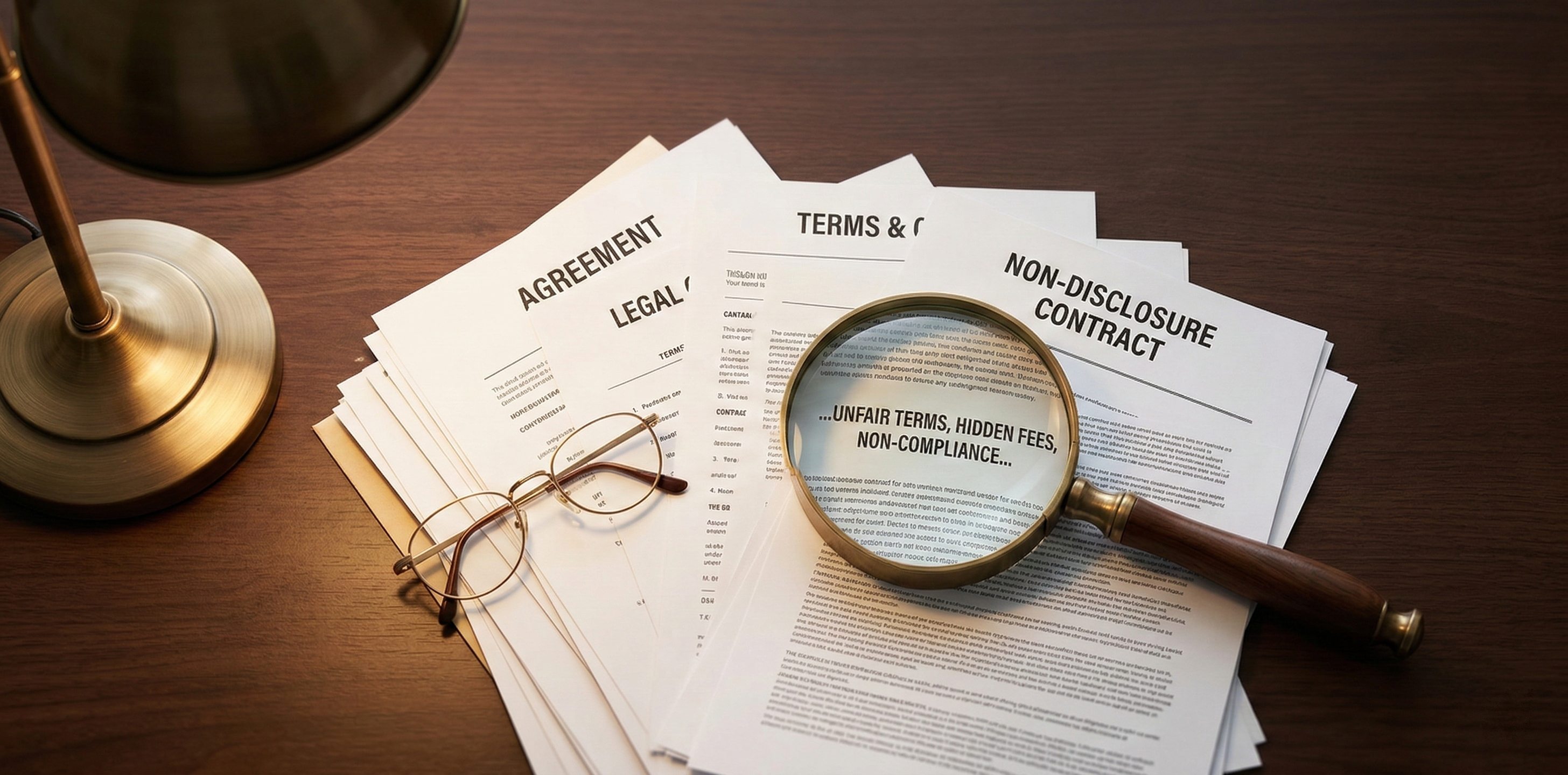
Consumer Litigation & Class Action
When corporations cut corners, break promises, or violate consumer protection laws, they count on individual consumers not having the resources to fight back. We change that equation.
Consumer Protection
Holding Corporations Accountable
Consumer litigation holds corporations accountable when they engage in fraudulent, deceptive, or unfair business practices that harm individuals. Under California’s strong consumer protection laws, you have the right to fight back.
California has some of the strongest consumer protection laws in the nation. Statutes like the Unfair Competition Law (Business & Professions Code 17200), the False Advertising Law (Business & Professions Code 17500), and the Consumer Legal Remedies Act (Civil Code 1750) give individual consumers and classes of consumers powerful legal tools to hold businesses accountable for deceptive, unfair, and unlawful practices.
At The Law Offices of Farris Ain, we represent consumers in both class action lawsuits and individual claims against companies that violate these laws. Our cases range from challenging false advertising by national brands to pursuing local businesses engaged in fraudulent or predatory practices. We also represent employees in employment law disputes and individuals harmed by negligence through our personal injury practice.
The goal of consumer litigation is straightforward: to stop unlawful conduct, to recover what was wrongfully taken from consumers, and to ensure that the cost of breaking the law exceeds the profit. When a company knows it will face serious litigation for cutting corners or deceiving customers, it changes behavior. That is the deterrent effect of consumer protection law, and it benefits everyone.
How Class Action Lawsuits Work
A class action is a lawsuit in which one or more individuals (the “named plaintiffs” or “class representatives”) bring a claim on behalf of a larger group of people (the “class”) who have been harmed by the same conduct. Class actions exist because, in many cases, the individual harm to each consumer may be too small to justify the cost of a separate lawsuit — but the aggregate harm across thousands or millions of consumers is enormous.
For example, if a company overcharges each customer by $15 through a hidden fee, no individual consumer would hire a lawyer to recover that amount. But if the company did this to 500,000 customers, the total unjust enrichment is $7.5 million. A class action makes it economically feasible to pursue that claim and hold the company accountable.
Class actions in California proceed through several stages:
- Filing and investigation — The named plaintiff files a complaint and the attorney conducts an investigation into the scope and nature of the misconduct.
- Class certification — The court decides whether the case is suitable for class treatment, examining factors such as numerosity, commonality, typicality, and adequacy of representation.
- Discovery and litigation — Both sides exchange documents and information, take depositions, and prepare for trial or settlement.
- Settlement or trial — Most class actions resolve through settlement, which must be approved by the court as fair, reasonable, and adequate. If no settlement is reached, the case proceeds to trial.
- Distribution — Class members receive their share of any recovery, which may come as a direct payment, a credit, or other relief depending on the terms.
Individual Consumer Protection Claims
Not every consumer dispute is suited for class action treatment. In many cases, an individual consumer suffers significant harm that warrants a standalone lawsuit. California’s consumer protection statutes provide powerful remedies for individual claims, including:
- Actual damages — The amount of money you lost as a direct result of the defendant’s unlawful conduct.
- Restitution — The return of money or property that the defendant wrongfully obtained from you.
- Statutory damages — Under the CLRA and certain other statutes, consumers may recover additional damages above and beyond their actual losses.
- Injunctive relief — A court order requiring the business to stop its unlawful practice, protecting you and other consumers going forward.
- Attorney fees and costs — Many California consumer protection statutes allow prevailing consumers to recover their attorney fees and litigation costs from the defendant, removing the financial barrier to bringing a claim.
- Punitive damages — In cases involving intentional fraud or malice, additional damages may be awarded to punish the wrongdoer under California Civil Code 3294.
The CLRA: A Consumer’s Most Powerful Tool
The Consumer Legal Remedies Act (Civil Code 1750-1784) is one of California’s most important consumer protection statutes. It prohibits 27 specific types of unfair or deceptive business practices in transactions for goods or services, including:
- Misrepresenting the source, sponsorship, or quality of goods or services
- Advertising goods or services with intent not to sell them as advertised
- Representing that a transaction confers rights that it does not
- Inserting unconscionable provisions in contracts
- Making false statements about the need for parts, replacements, or repairs
The CLRA provides for actual damages, punitive damages in appropriate cases, injunctive relief, and attorney fees. It also prohibits businesses from including “waiver” clauses in contracts that attempt to strip consumers of their CLRA rights — any such clause is void and unenforceable.
UCL (Section 17200): The Broadest Consumer Statute
California’s Unfair Competition Law is remarkable for its breadth. It covers any business practice that is unlawful (violates any law), unfair (the harm to consumers outweighs any benefit), or fraudulent (likely to deceive a reasonable consumer). This “borrowing” statute can incorporate violations of virtually any other law — state or federal — as the basis for a UCL claim, making it an extraordinarily versatile tool for consumer attorneys.
“Corporations have armies of lawyers to protect their profits. Consumers deserve an attorney who will fight just as hard to protect their rights.”
Types of Consumer Cases We Handle
Our consumer litigation practice covers a broad range of claims arising from corporate misconduct and violations of California and federal consumer protection statutes.
False Advertising & Deceptive Marketing
Claims against businesses that use misleading advertising, bait-and-switch tactics, hidden fees, or deceptive product labeling to mislead consumers.
Unfair Business Practices
Broad claims under California's Unfair Competition Law targeting any unlawful, unfair, or fraudulent business act or practice — one of the most powerful consumer protection statutes in the country.
Defective Products & Product Liability
Claims against manufacturers, distributors, and retailers for injuries or losses caused by dangerous or defective consumer products, from electronics to pharmaceuticals.
Consumer Fraud & Financial Abuse
Cases involving predatory lending, hidden fees, unauthorized charges, identity theft by businesses, and financial services fraud targeting consumers.
Data Privacy Violations
Claims arising from data breaches, unauthorized sharing of personal information, and violations of consumer privacy rights under California's groundbreaking privacy laws.
Warranty Violations
Claims for breach of express or implied warranties, including the Song-Beverly Consumer Warranty Act ("Lemon Law") for defective vehicles and consumer goods.
California’s Consumer Protection Framework
California leads the nation in consumer protection legislation. Here are the key statutes that form the foundation of our consumer litigation practice.
Unfair Competition Law (UCL)
The broadest consumer protection statute in California. Prohibits any unlawful, unfair, or fraudulent business act or practice. Allows claims based on violations of virtually any other law.
False Advertising Law (FAL)
Prohibits any untrue or misleading advertising. Covers statements in any medium — print, digital, television, social media, packaging, and in-store displays.
Consumer Legal Remedies Act (CLRA)
Enumerates 27 specific prohibited practices and provides for actual damages, punitive damages, injunctive relief, and attorney fees. Cannot be waived by contract.
California Consumer Privacy Act (CCPA)
Gives consumers the right to know what personal data is collected, to delete it, and to opt out of its sale. Provides a private right of action for data breaches with statutory damages of $100-$750 per consumer per incident.
Song-Beverly Consumer Warranty Act
California’s “Lemon Law” and broader warranty protection statute. Requires manufacturers to repair, replace, or refund defective consumer goods. Provides for civil penalties of up to two times the actual damages in willful violations.
Why Farris Ain for Consumer Litigation
Deep Litigation Experience
Farris Ain has litigated hundreds of state and federal lawsuits. That courtroom experience is essential when going up against well-funded corporate legal teams.
Plaintiff-Side Focus
We exclusively represent consumers and employees — never corporations. That singular focus means our interests are always fully aligned with the people we represent.
Results-Driven Approach
Every consumer case is pursued with the goal of maximizing recovery for our clients and effecting real change in corporate behavior. We measure success by outcomes, not billable hours.
Frequently Asked Questions
What is consumer litigation?
Consumer litigation is legal action taken against companies that engage in fraud, deceptive advertising, unfair business practices, breach of warranty, or sale of defective products. In California, consumers are protected by powerful statutes including the Unfair Competition Law (UCL), the Consumer Legal Remedies Act (CLRA), and the False Advertising Law, which provide remedies such as damages, restitution, and injunctive relief.
What is a class action lawsuit?
A class action is a lawsuit filed on behalf of a large group of people who suffered similar harm from the same company or practice. It allows individuals to pool their resources and claims against large corporations, making it economically feasible to pursue cases where each person's individual loss might be too small to justify a separate lawsuit. Class members typically pay no upfront fees to participate.
How much does it cost to file a consumer lawsuit?
Most consumer protection cases are taken on a contingency basis, meaning you pay no upfront costs and owe no attorney fees unless we win your case. Additionally, many California consumer protection statutes — including the CLRA and the UCL — allow prevailing consumers to recover their attorney fees and litigation costs from the defendant, further reducing the financial barrier to pursuing a claim.
What damages can I recover in a consumer protection case?
Depending on the nature of your claim, you may be able to recover actual damages (your out-of-pocket losses), restitution (return of money wrongfully taken), statutory damages (additional amounts provided by law), punitive damages in cases involving intentional fraud or malice, injunctive relief to stop the unlawful conduct, and attorney fees and costs. The specific remedies available depend on the statute under which your claim is brought.
Have You Been Wronged by a Corporation?
Whether you are considering joining a class action or pursuing an individual consumer claim, we will evaluate your case at no charge. Contact us for a free, confidential consultation.