Truck Accident Claims
Accidents involving commercial trucks — 18-wheelers, semi-trucks, tankers, and delivery vehicles — cause catastrophic injuries and complex legal battles. These cases require an attorney who understands federal trucking regulations and knows how to take on large trucking companies and their insurers.
Personal Injury
California Truck Accident Law
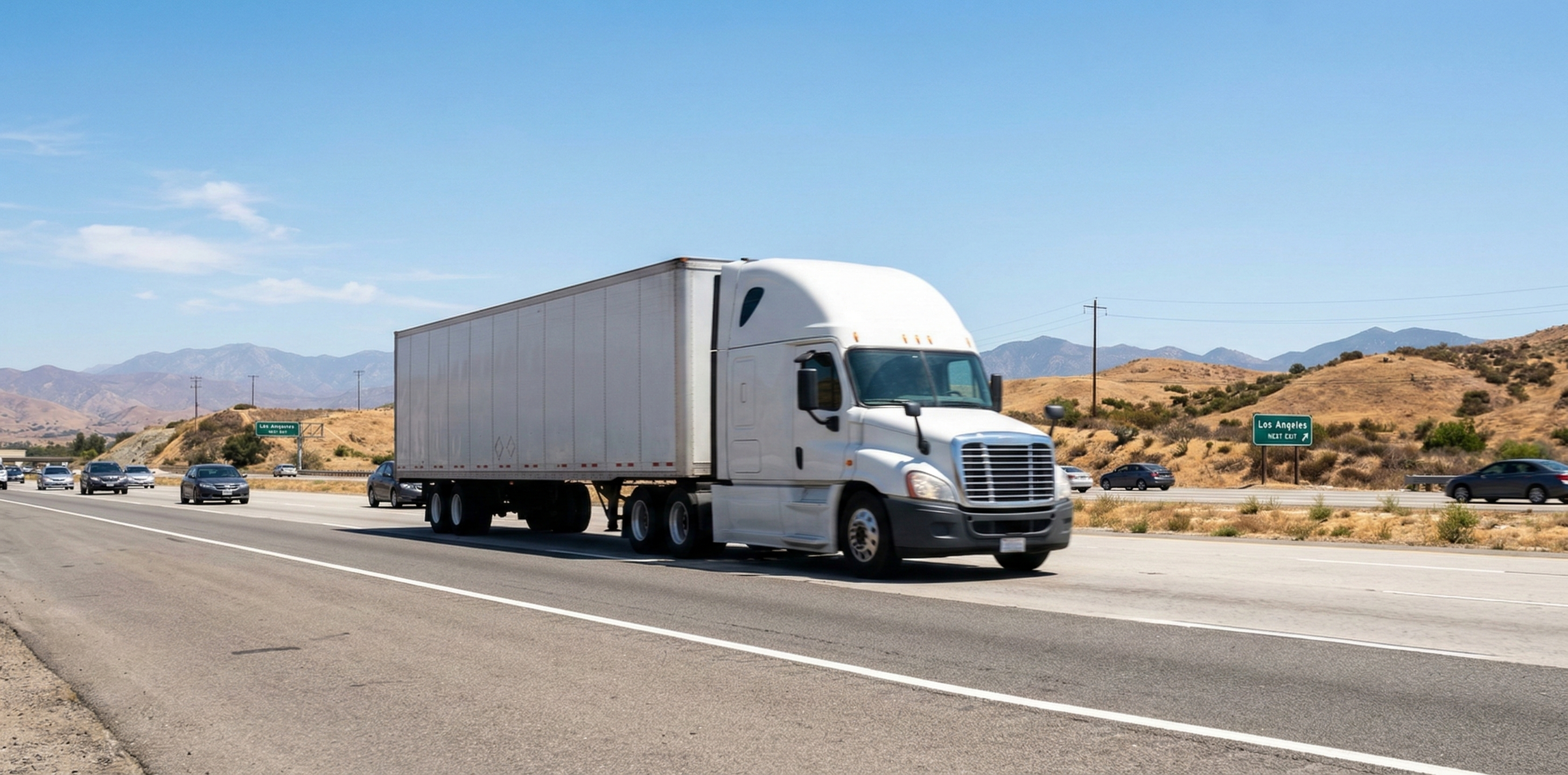
When a fully loaded commercial truck weighing up to 80,000 pounds collides with a passenger vehicle, the results are almost always catastrophic. The physics are simple and devastating: a tractor-trailer outweighs a standard car by a factor of 20 to 1. At The Law Offices of Farris Ain, we have the experience and resources to take on the trucking industry’s well-funded legal teams and fight for the compensation our clients need to rebuild their lives.
Why Truck Accident Cases Are Different
Truck accident cases are fundamentally different from ordinary car accident claims in several critical ways:
- Severity of injuries: The massive size and weight differential between commercial trucks and passenger vehicles means that truck accidents produce far more serious injuries—traumatic brain injuries, spinal cord damage, multiple fractures, internal organ damage, and death.
- Multiple potentially liable parties: Unlike a car accident where liability typically falls on one driver, truck accident cases may involve multiple defendants with deep pockets and aggressive legal teams.
- Federal regulations: The trucking industry is heavily regulated by federal law, and violations of these regulations can be powerful evidence of negligence.
- Rapid evidence destruction: Trucking companies have rapid-response teams that arrive at accident scenes quickly to protect the company’s interests. Critical evidence—electronic logging data, maintenance records, driver files—can be lost or destroyed if preservation demands are not made immediately.
Federal Motor Carrier Safety Regulations
The Federal Motor Carrier Safety Regulations (FMCSRs), found at 49 CFR Parts 350 through 399, establish comprehensive safety standards for the commercial trucking industry. Violations of these regulations are strong evidence of negligence. Key regulatory areas include:
Hours of Service Rules (49 CFR Part 395)
Driver fatigue is one of the leading causes of truck accidents. Federal hours of service rules limit how long a commercial driver may operate a vehicle:
- Property-carrying drivers may drive a maximum of 11 hours after 10 consecutive hours off duty
- Drivers may not drive beyond the 14th consecutive hour after coming on duty
- Drivers must take a 30-minute break after 8 cumulative hours of driving
- Drivers may not drive after 60/70 hours on duty in 7/8 consecutive days
All commercial vehicles must be equipped with Electronic Logging Devices (ELDs) that automatically record driving time, making it harder—but not impossible—for drivers and carriers to falsify their hours.
Driver Qualification Requirements (49 CFR Part 391)
Trucking companies are required to ensure that their drivers meet specific qualifications, including minimum age requirements, valid commercial driver’s licenses, medical certifications, and clean driving records. Companies that hire unqualified drivers or fail to conduct proper background checks can be held liable for negligent hiring.
Vehicle Maintenance and Inspection (49 CFR Parts 393, 396)
Federal law requires trucking companies to maintain their vehicles in safe operating condition and to conduct regular inspections. Common maintenance failures that cause accidents include:
- Brake failures and defects
- Tire blowouts from worn or underinflated tires
- Steering system failures
- Defective lighting and reflector systems
- Improperly secured cargo
Multiple Potentially Liable Parties
One of the most important differences between truck and car accident cases is the number of parties who may bear responsibility:
- The truck driver: For negligent driving, fatigue, distraction, impairment, or violation of traffic laws
- The trucking company: Under the doctrine of respondeat superior, the employer is vicariously liable for the negligent acts of its employees. Additionally, the company may be directly liable for negligent hiring, training, supervision, or retention of the driver.
- The cargo loader: If improperly loaded or secured cargo caused or contributed to the accident, the party responsible for loading may be liable
- The truck or parts manufacturer: If a defective truck component—such as brakes, tires, or steering—caused or contributed to the accident, the manufacturer may be strictly liable under product liability law
- The maintenance company: If a third-party maintenance provider performed negligent repairs or failed to identify dangerous defects during inspections
Vicarious Liability and Independent Contractor Issues
Trucking companies frequently try to avoid liability by classifying their drivers as independent contractors rather than employees. However, California law looks beyond labels to the actual nature of the working relationship. Under the ABC test and other legal standards, a trucking company that exercises control over how a driver performs their work may be held liable regardless of the driver’s classification.
Common Causes of Truck Accidents
Based on our experience handling these cases, the most common causes of truck accidents include:
- Driver fatigue: Despite hours of service regulations, many drivers are pressured by carriers to exceed legal driving limits to meet delivery deadlines
- Speeding: Commercial trucks require significantly longer distances to stop than passenger vehicles, making speeding especially dangerous
- Improper loading: Overloaded or improperly secured cargo can shift during transport, causing the truck to become unstable or tip over
- Mechanical failure: Brake failures, tire blowouts, and other equipment malfunctions resulting from inadequate maintenance
- Inadequate training: Drivers who are not properly trained on vehicle operation, cargo securement, and defensive driving techniques
Preserving Critical Evidence
In truck accident cases, time is your enemy. Trucking companies are only required to retain certain records for limited periods, and critical electronic data can be overwritten quickly. An experienced attorney will immediately:
- Send a spoliation letter demanding that the trucking company preserve all evidence related to the accident
- Obtain the truck’s electronic control module (ECM) or “black box” data, which records speed, braking, and other critical information in the moments before a crash
- Secure driver logs and ELD records to determine whether hours of service violations occurred
- Request maintenance and inspection records to identify any pre-existing mechanical defects
- Preserve dash cam and surveillance footage from the truck, nearby businesses, and traffic cameras
Available Damages
Given the severity of injuries in truck accident cases, the damages can be substantial. Victims may recover compensation for medical expenses, lost wages and earning capacity, pain and suffering, emotional distress, loss of enjoyment of life, property damage, and, in cases involving egregious conduct, punitive damages. In wrongful death cases, surviving family members may bring a claim for loss of financial support, companionship, and funeral expenses.
“When an 80,000-pound truck causes an accident, the injuries are severe and the legal battle is complex. We have the experience and resources to take on the trucking industry.”
Injured in a Truck Accident?
Trucking companies have teams of lawyers working to minimize your claim. Level the playing field with an experienced trial attorney. Contact us for a free consultation.